AML screening is essential for detecting sanctions exposure, politically exposed persons (PEPs), adverse media, and internal watchlist risks. However, screening systems can generate large volumes of possible matches—especially when names are common, transliterated differently, or supported by limited customer information.
Sending every alert to manual review creates delays, increases compliance costs, and distracts investigators from genuinely high-risk customers. A risk-based AML screening workflow solves this problem by combining screening results with verified identity data and broader customer context before deciding what requires escalation.
1. What Is Risk-Based AML Screening?
Traditional screening often begins with a name comparison. If the customer’s name resembles an entry on a sanctions, PEP, adverse media, or watchlist database, the system creates an alert.
The match itself is not always conclusive. Two people may share the same name, while spelling differences, aliases, transliteration, and incomplete records can make real matches harder to identify.
Risk-based AML screening adds context to the initial match. It considers:
- Match strength and alias similarity
- Date of birth and nationality
- Address and geographic exposure
- Identity document information
- Customer type and beneficial ownership
- Product and transaction risk
- Previous screening and investigation results
The objective is not to ignore low-confidence alerts. It is to assess them proportionately and place the strongest risk evidence earlier in the review queue.
This aligns with the FATF risk-based approach, which expects institutions to identify, assess, and understand financial crime risks and apply measures proportionate to those risks rather than removing entire customer groups without individual assessment. FATF risk-based approach
2. Why Screening Alerts Need Reliable Identity Data
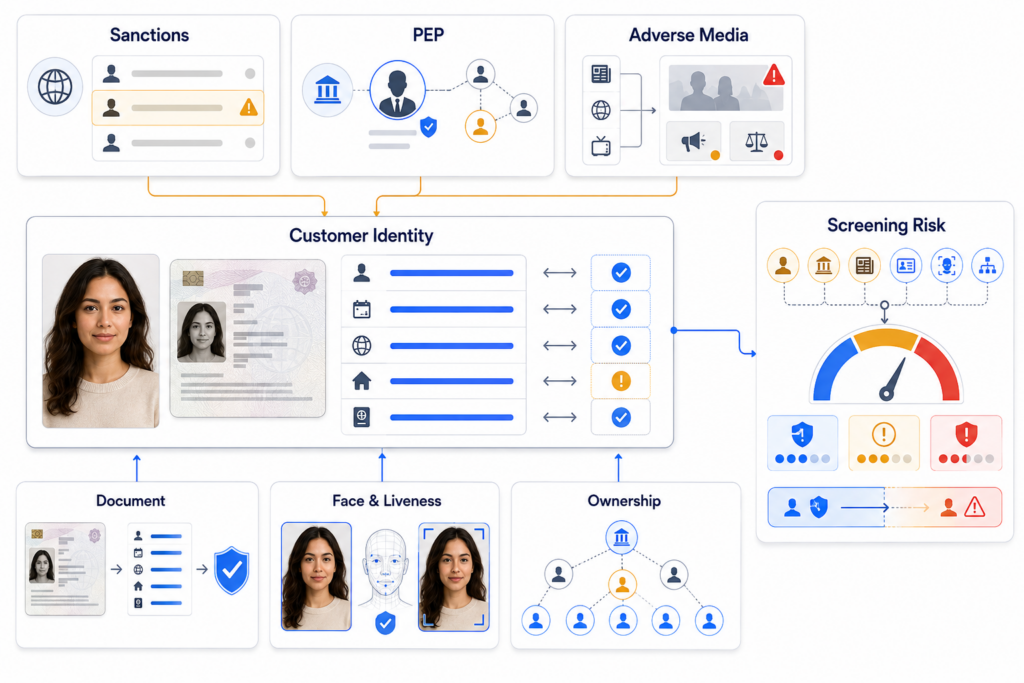
AML screening quality depends on the accuracy of the customer information being screened. A correctly configured sanctions engine can still produce weak results if the submitted identity is incomplete, fraudulent, or associated with the wrong person.
For example, criminals may:
- Submit altered or synthetic identity documents
- Use a real person’s name with a different facial identity
- Create accounts through deepfakes or injection attacks
- Reuse identities across multiple devices and accounts
- Conceal beneficial owners behind layered entities
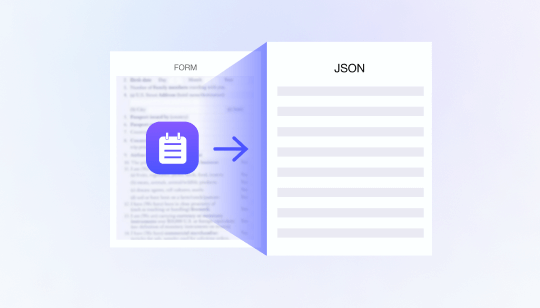
FinAuth strengthens the identity layer before screening results enter the compliance workflow. Document OCR extracts structured names, dates of birth, document numbers, nationality, and address data. Document Verification evaluates authenticity and tampering risks. Face Verification and Liveness Detection help confirm that the applicant matches the trusted portrait and is genuinely present.
These verified attributes can improve screening precision and give reviewers stronger evidence for distinguishing a true match from a false positive.
3. Signals That Should Influence Review Priority
A screening alert should be evaluated as part of the customer’s complete risk profile.
Screening evidence: Exact or close name match, alias overlap, date-of-birth consistency, nationality, list category, and the reliability of the source.
Identity evidence: Document authenticity, OCR consistency, face-match confidence, liveness results, and possible deepfake or injection indicators.
Customer context: Occupation, business activity, account purpose, beneficial ownership, expected transaction behavior, and geographic exposure.
Device and behavioral signals: New or high-risk devices, virtual environments, abnormal access patterns, linked accounts, and activity inconsistent with the customer’s history.
Transaction context: Unusual value, rapid fund movement, new beneficiaries, cross-border activity, or transactions inconsistent with the declared account purpose.
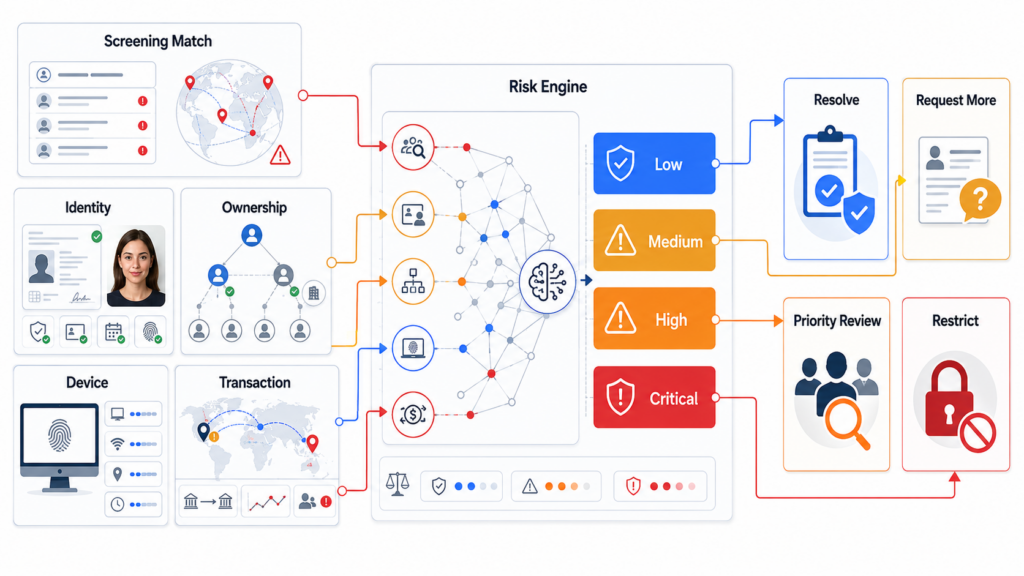
One weak name similarity may remain a low-priority alert. The same similarity combined with matching identity attributes, high-risk ownership, suspicious devices, and unusual transactions should move rapidly toward investigation.
4. Building a Risk-Based AML Screening Workflow
A scalable workflow can be organized into five stages.
First, establish a verified customer identity. Capture the identity document, extract structured data, check authenticity, compare the document portrait with the customer, and confirm liveness.
Second, screen relevant parties. Screening may include the customer, beneficial owners, directors, authorized representatives, beneficiaries, and other connected parties required by the institution’s policy.
Third, enrich possible matches. Compare the screening result with verified identity attributes, customer context, device intelligence, ownership relationships, and transaction behavior.
Fourth, calculate combined risk. The FinAuth Risk Engine can ingest identity results and external screening outcomes, then combine them with device, session, behavioral, and event-level risk. No individual name match or biometric score determines the outcome alone.
Fifth, apply proportionate actions. Low-risk false positives can be resolved automatically where policy permits. Uncertain cases may require more information. Strong matches or overlapping risk indicators can receive priority review, enhanced due diligence, restrictions, or rejection.
5. Screening Must Continue After Onboarding
Customer risk can change after the initial verification. Sanctions and watchlists are updated, customers become PEPs, beneficial ownership changes, and new adverse information may emerge.
OFAC recommends a risk-based sanctions compliance approach and notes that screening frequency should reflect the nature of the business, customer base, and relevant risks. It also identifies events such as policy renewal, amendments, claims, payments, and sanctions-list updates as potential rescreening points in the insurance context. OFAC FAQ 65
For digital financial services, similar event-driven logic can include:
- Profile or ownership changes
- New high-risk beneficiaries
- Account recovery
- Unusual cross-border transactions
- Material changes in customer activity
- Watchlist or sanctions-list updates
FinAuth can support these workflows by triggering identity reverification when the screening or behavioral risk changes. Instead of repeating full KYC for every update, the Risk Engine can select an appropriate action, such as Face Verification, Liveness Detection, document recapture, full KYC, or manual review.
6. How to Reduce False Positives Without Weakening Controls
Reducing review volume should come from better evidence and routing—not from broadly relaxing matching rules.
Effective controls include:
- Standardizing names across scripts and formats
- Screening aliases and connected parties
- Using verified dates of birth, nationality, and document data
- Applying different review queues by alert severity
- Recording why alerts were resolved or escalated
- Reusing approved false-positive decisions carefully
- Monitoring changes in match and escalation rates
Compliance teams should track alert volumes, true-match rates, review time, escalation outcomes, repeated alerts, and the performance of automated resolution rules. These metrics help identify whether the workflow is reducing noise while preserving genuine risk detection.
7. AML Screening Q&A
What is AML screening?
AML screening compares customers and related parties against sanctions, PEP, adverse media, and watchlist data to identify possible financial crime or compliance risk.
Is an AML screening match proof of wrongdoing?
No. A match is an alert that requires contextual assessment. Identity attributes, ownership, geography, transaction behavior, and source reliability help determine whether it is relevant.
How does FinAuth support AML screening workflows?
FinAuth verifies customer identity and combines document, face, liveness, device, behavioral, and external screening signals within its Risk Engine. This helps route higher-risk cases to stronger verification or priority review.
When should customers be rescreened?
Rescreening can occur periodically and after risk events such as list updates, ownership changes, profile updates, unusual transactions, or changes in geographic exposure.
8. Conclusion
Risk-based AML screening helps compliance teams focus on customers and alerts supported by the strongest combined evidence. It improves efficiency without treating screening as a simple name-match exercise.
By strengthening identity data and combining screening outcomes with biometric, device, behavioral, and transaction risk, FinAuth helps businesses automate lower-risk decisions and prioritize cases that require deeper investigation.